


English grammar mein kuch verbs aise hote hain jo thoda tricky lagte hain, lekin unhe samajhne ke baad unka use bahut simple ho jaata hai. “Seek” unhi irregular verbs mein se ek hai. Iska meaning hota hai “khojna,” “talash karna,” ya “mangna.”
Aapne sentences mein suna hoga, “He seeks knowledge,” ya “They seek advice from elders.” Ye dono sentences present tense mein hain. Lekin jab hum past tense mein baat karte hain, to “seek” ka form badal kar “sought” ho jaata hai.
Example:
- I sought help from my teacher.
- They sought answers to their problems.
Yahan “sought” dikhata hai ki action pehle ho chuka hai. “Seek” ek irregular verb hai, isliye iska past tense “-ed” lagakar nahi banta.
Definition of Seek
“Seek” ka matlab hota hai “kisi cheez ko dhoondhna ya prapt karne ki koshish karna.” Iska use physical cheezon ke liye bhi hota hai, jaise “seek a job,” aur abstract cheezon ke liye bhi, jaise “seek happiness,” “seek advice.”
Example:
- I seek knowledge. (Main gyaan ki talash karta hoon.)
- They seek justice. (Woh insaaf chahte hain.)
Jab ye actions past mein hue hote hain, to “seek” ka form “sought” ban jaata hai.
Example:
- I sought advice from my father. (Mainne apne pita se salah li.)
Forms of the Verb “Seek”
| Tense | Verb Form | Pronunciation | Example |
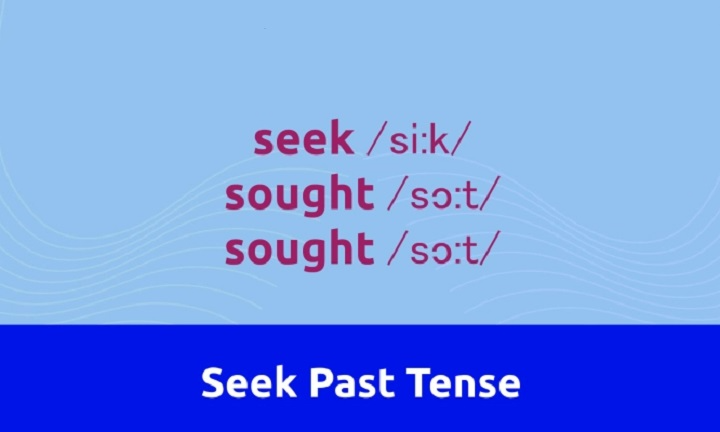
| Present | seek | /siːk/ | I seek help. |
| Past | sought | /sɔːt/ | I sought help. |
| Past Participle | sought | /sɔːt/ | I have sought help. |
“Seek” irregular verb hai, isliye iska past aur past participle dono “sought” hote hain. Pronunciation “sort” jaisa hota hai, lekin “r” silent rehta hai.
Formula of Seek in Past Tense
Formula:
Subject + sought + object
Examples:
• I sought advice from my teacher.
• She sought help from the doctor.
• They sought truth in religion.
Ye structure Simple Past Tense ke liye use hota hai jahan action complete ho chuka hai.
Positive Sentences (Affirmative Form)
Formula: Subject + sought + object
Examples:
• I sought permission from my parents.
• He sought a better life in another city.
• We sought peace after the argument.
• They sought protection from the storm.
Ye sab sentences batate hain ki “seeking” ka action already past mein ho chuka hai.
Negative Sentences
Formula: Subject + did not + seek + object
Important rule: “Did not” ke sath verb apne base form mein rehta hai, isliye “seek” likha jaata hai, “sought” nahi.
Examples:
• I did not seek help from anyone.
• She did not seek permission before leaving.
• They did not seek advice.
• We did not seek approval for that plan.
Common mistake: “did not sought” likhna galat hai. Correct form “did not seek” hai.
Interrogative Sentences
Formula: Did + subject + seek + object?
Examples:
• Did you seek help from your teacher?
• Did he seek justice?
• Did they seek new opportunities?
• Did we seek guidance from him?
Yahan “seek” apne base form mein hi use hota hai, chahe sentence past ke liye ho.
Wh-Question Sentences
Formula: Wh-word + did + subject + seek + object?
Examples:
• What did you seek from the meeting?
• Where did she seek help?
• Why did they seek advice?
• Who did you seek permission from?
Wh-words sentence ko clear aur specific banate hain.
When to Use Seek in Past Tense
Seek ka past tense “sought” tab use hota hai jab action past mein complete ho chuka ho. Iska use alag-alag situations mein hota hai.
Advice ya help lene ke liye
- I sought advice from my senior.
- They sought help from the police.
Knowledge ya truth khojne ke liye
- He sought knowledge through experience.
- The monk sought peace in silence.
Opportunities ya jobs ke liye
- She sought employment in a foreign company.
- We sought better opportunities abroad.
Approval ya permission ke liye
- I sought permission from my manager.
- They sought approval for the new plan.
Emotional or spiritual context
- He sought forgiveness for his mistakes.
- The people sought hope in dark times.
Common Time Expressions
Past tense mein “sought” ke sath kuch common words aur phrases aksar milte hain:
• last week
• last year
• a few days ago
• long ago
• in the past
• earlier today
Examples:
• I sought medical help last week.
• She sought guidance a few days ago.
• They sought advice in the past.
Ye time expressions action ke time ko define karte hain aur tense ko clear banate hain.
Difference Between Seek, Seeks and Sought
| Form | Tense | Example | Pronunciation |
| Seek | Present | I seek peace. | /siːk/ |
| Seeks | Present (singular subject) | He seeks justice. | /siːks/ |
| Sought | Past | I sought help yesterday. | /sɔːt/ |
Seek aur sought ka major difference ye hai ki “sought” ek completed action ko show karta hai, jabki “seek” present ya general action dikhata hai.
Examples of Daily Use
- I sought advice from my teacher.
- They sought help after the accident.
- She sought a better opportunity.
- We sought peace after the fight.
- He sought answers from his mentor.
- I sought forgiveness for my behavior.
- They sought refuge in the temple.
- The soldiers sought cover during the attack.
- She sought information about the new course.
- We sought justice for the victims.
Ye sab examples simple aur real-life situations ke liye useful hain.
Negative and Interrogative Example Pair

Negative: I did not seek help from anyone.
Interrogative: Did you seek help from anyone?
Dono forms sentence ke sense ko change karte hain, lekin tense past hi rehta hai.
Use of “Have Sought” (Past Participle)
Agar aapko batana hai ki aapne koi cheez pehle se hi khoj li hai, to “have sought” use hota hai. Ye Present Perfect Tense ke liye hota hai.
Examples:
• I have sought advice from my seniors.
• She has sought peace through meditation.
• They have sought justice for years.
“Have” ya “has” ke sath “sought” use hota hai, jo action ke completion aur uske present connection ko show karta hai.
Common Mistakes to Avoid
Using wrong past form
Wrong: I seeked advice.
Correct: I sought advice.
Using sought with did
Wrong: I did not sought help.
Correct: I did not seek help.
Confusing pronunciation
“Sought” ka pronunciation “sort” jaisa hota hai, lekin “r” sound silent hoti hai.
Mixing tenses
Wrong: I seek help yesterday.
Correct: I sought help yesterday.
Practice Section
Fill in the blanks with the correct form of “seek.”
- I ______ (seek) help from my teacher yesterday.
→ I sought help from my teacher yesterday.
- They ______ (not seek) advice from anyone.
→ They did not seek advice from anyone.
- Did you ______ (seek) permission before entering?
→ Did you seek permission before entering?
- She ______ (seek) forgiveness for her mistake.
→ She sought forgiveness for her mistake.
- We ______ (seek) a solution to the problem.
→ We sought a solution to the problem.
Use in Different Tenses
| Tense | Example | Meaning |
| Simple Present | I seek truth. | Abhi ya regularly khojta hoon. |
| Present Continuous | I am seeking a new job. | Abhi khoj raha hoon. |
| Simple Past | I sought advice. | Pehle khoj chuka hoon. |
| Past Continuous | I was seeking help. | Ek time par khoj raha tha. |
| Present Perfect | I have sought advice. | Pehle se khoj chuka hoon. |
| Past Perfect | I had sought help. | Dusre past event ke pehle khoj chuka tha. |
| Future | I will seek help. | Aane wale samay mein khoj karunga. |
| Future Perfect | I will have sought help. | Future mein ek specific time tak khoj chuka honga. |
Is table se aap dekh sakte hain ki “seek” kaise har tense mein alag meaning deta hai.
Related Phrases and Expressions
Seek ke sath kuch common idioms aur phrases bhi hote hain:
- Seek advice – salah lena
Example: She sought advice from her mentor. - Seek approval – anumati lena
Example: I sought approval before starting the project. - Seek forgiveness – maafi mangna
Example: He sought forgiveness from his friend. - Seek help – madad lena
Example: They sought help from the government. - Seek peace – shanti ki talash karna
Example: The monk sought peace in meditation.
In phrases ko aap daily life mein naturally use kar sakte hain.
Importance of Seek in Daily English
Seek ek formal aur polite verb hai jo academic writing, official communication, aur professional contexts mein zyada use hota hai. Jab aap kisi se request karte ho ya kisi cheez ki talash mein hote ho, to “seek” word aapko refined aur respectful tone deta hai.
Examples:
- I sought an opportunity to work abroad.
- She sought advice before making the decision.
- They sought to improve their performance.
Ye verb aapko formal English bolne aur likhne dono mein confident banata hai.
Practice Tips for Learners
- Daily ek simple sentence likhiye jisme “sought” ka use ho.
- Pronunciation “sort” ki tarah bolne ki aadat daalein.
- Reading aur listening ke through dekhiye ki native speakers “seek” aur “sought” ka use kaise karte hain.
Example Practice:
• I sought help yesterday.
• She sought a chance to explain herself.
• They sought new ways to earn money.
Regular repetition se “sought” aapke sentences mein naturally fit ho jaayega.
Real-Life Situations
Aap “seek” aur “sought” ka use daily life ke kai situations mein kar sakte hain:
- Jab aap kisi se guidance le rahe ho
- I sought advice from my boss.
- Jab aap kisi goal ya truth ki talash mein ho
- He sought the meaning of life.
- Jab aap kisi opportunity ke liye try kar rahe ho
- They sought jobs in foreign companies.
- Jab aap kisi galti ke liye maafi maang rahe ho
- She sought forgiveness after realizing her mistake.
Ye examples dikhate hain ki “seek” ek practical aur powerful word hai jo har situation mein fit baithta hai.
Quick Summary
| Type | Formula | Example | Pronunciation |
| Positive | Subject + sought + object | I sought help yesterday. | /sɔːt/ |
| Negative | Subject + did not + seek + object | I did not seek advice. | /siːk/ |
| Question | Did + subject + seek + object? | Did you seek help? | /siːk/ |
“Seek” ek simple aur meaningful verb hai jo “to search,” “to ask for,” ya “to request” ka sense deta hai. Iska past tense sought hota hai aur past participle bhi sought hi rehta hai.
Aapko yaad rakhna hai:
Seek – Present
Sought – Past and Past Participle
Example:
- I sought advice from my teacher yesterday.
- She has sought peace all her life.
Seek aur sought ka sahi use karna English grammar aur communication dono ke liye important hai. Daily practice se aap in forms ko confidently use kar paayenge, chahe writing ho ya speaking.