


The Present Tense in English is used to talk about actions or situations that are happening right now, regularly, or are always true. It is one of the most essential tenses in the English language, and knowing how to use it properly can help you communicate clearly and confidently.
In Hindi, the Present Tense is used in similar ways but has different forms based on the subject and the verb. The structure of sentences in Hindi is quite simple, and it’s important to understand how these structures translate into English. Let’s take a look at how Present Tense works in both languages.
What is Present Tense?

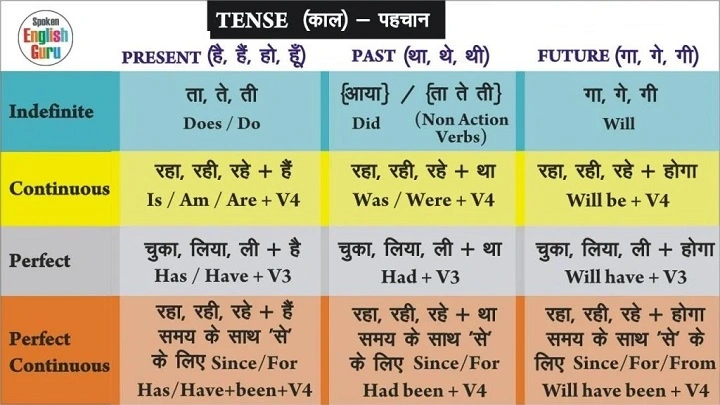
The Present Tense is a verb tense used to describe actions that are currently happening, habitual actions, or general truths. In English, there are different forms of Present Tense, including the Present Indefinite (Simple Present), Present Continuous, Present Perfect, and Present Perfect Continuous.
In Hindi, Present Tense is commonly used for the following:
- Actions happening in the present moment
- Regular or habitual actions
- General facts or truths
Let’s look at the different forms of Present Tense and how they are translated from Hindi to English.
Forms of Present Tense
Present Indefinite Tense (Simple Present)
This form is used to express actions that happen regularly, facts, or general truths.
Structure:
Subject + Base form of verb (V1) + Object
For third-person singular (he, she, it), add -s to the verb.
Examples in Hindi:
- मैं रोज़ पढ़ता हूँ।
- वह स्कूल जाती है।
- हम खेलते हैं।
Translation to English:
- I study every day.
- She goes to school.
- We play football.
Usage:
- I study every day.
- He reads books every morning.
- They eat lunch at 1 PM.
Present Continuous Tense
This tense is used to describe actions that are happening right now or ongoing actions.
Structure:
Subject + am/are/is + verb (ing) + object
Examples in Hindi:
- मैं पढ़ रहा हूँ।
- वह गाना गा रहा है।
- वे खेल रहे हैं।
Translation to English:
- I am studying.
- He is singing a song.
- They are playing cricket.
Usage:
- I am eating dinner right now.
- She is working on her project.
- We are watching a movie.
Faculty members and administrative staff can manage institutional workflows, grading systems, and service books by visiting the Samarth Portal.
Present Perfect Tense
This tense is used to describe actions that have been completed at an unspecified time in the past but have relevance in the present.
Structure:
Subject + has/have + past participle of the verb + object
Examples in Hindi:
- मैंने खाना खा लिया है।
- उसने किताब पढ़ी है।
- हम स्कूल जा चुके हैं।
Translation to English:
- I have eaten the food.
- He has read the book.
- We have gone to school.
Usage:
- I have finished my homework.
- They have arrived at the station.
- She has completed the work.
Present Perfect Continuous Tense
This tense is used to describe actions that started in the past and are still continuing or have just finished.
Structure:
Subject + has/have + been + verb (ing) + object
Examples in Hindi:
- मैं दो घंटे से पढ़ रहा हूँ।
- वह तीन साल से यहाँ काम कर रहा है।
- हम देर से दौड़ रहे हैं।
Translation to English:
- I have been studying for two hours.
- He has been working here for three years.
- We have been running late.
Usage:
- I have been waiting for you.
- They have been living here for five years.
- She has been working all day.
✅ Key Points to Remember
- Simple Present Tense (Present Indefinite): Used for regular actions, habits, or general truths.
- Present Continuous Tense: Used for actions that are happening right now or are ongoing.
- Present Perfect Tense: Used for actions that happened in the past but have an effect in the present.
- Present Perfect Continuous Tense: Used for actions that started in the past and are still continuing or have just been completed.
Practice Exercise (Translate Hindi to English)
Translate these sentences from Hindi to English using the appropriate form of Present Tense:
- वह खाना खाता है।
- मैं किताब पढ़ रहा हूँ।
- वे स्कूल जा चुके हैं।
- हम खेल रहे हैं।
- तुम क्या कर रहे हो?
Answers:
- He eats food.
- I am reading a book.
- They have gone to school.
- We are playing.
- What are you doing?
When to Use Present Tense
Present Tense is used in the following scenarios:
For routines and habits:
-
- I wake up at 7 AM every day.
- She brushes her teeth twice a day.
- I wake up at 7 AM every day.
For things happening right now (Present Continuous):
-
- I am writing a blog post right now.
- They are studying for their exams.
- I am writing a blog post right now.
For facts and general truths:
-
- The sun rises in the east.
- Water boils at 100°C.
- The sun rises in the east.
For experiences or actions that have been completed (Present Perfect):
-
- I have finished my lunch.
- They have seen the movie.
- I have finished my lunch.
⚠️ Common Mistakes to Avoid
| Mistake | Correction | Reason |
| I am eat. | I am eating. | Use the correct form of the verb in continuous tenses. |
| She go to school. | She goes to school. | Use -s with the third person singular (he, she, it). |
| They has gone. | They have gone. | Use have for plural subjects. |
Summary Table
| Tense | Structure | Example |
| Present Indefinite | Subject + Base verb | He plays football. |
| Present Continuous | Subject + am/are/is + verb (ing) | She is reading a book. |
| Present Perfect | Subject + has/have + past participle | I have eaten. |
| Present Perfect Continuous | Subject + has/have + been + verb (ing) | They have been working. |
Understanding the Present Tense is crucial for expressing actions that occur regularly, right now, or have just been completed. In both Hindi and English, the structure may differ, but the meaning remains the same. Mastering these tenses will allow you to describe actions more accurately and fluently in English.
To sum up:
- Present Indefinite for habits and routines.
- Present Continuous for actions happening at the moment.
- Present Perfect for actions that affect the present.
- Present Perfect Continuous for ongoing actions that started in the past.
Keep practicing with these examples and try forming sentences in both languages to enhance your understanding!