



You open your email account and find one that begins with the words, “Greetings of the day!” It is formal and polite, and a bit unusual. You can’t help asking: what is it actually? Is it business speak? Is it antique or excessively courteous? Do you yourself ever use it?
It is one of those always-in-between terms which is welcoming but not warmly welcoming. It’s employed as some kind of informal hello by some, but for others it’s too ambiguous or simply antiquated. Having an understanding of its meaning, etymology, and usage will enable you to decide if, and when, it will be included in your vocabulary.
This guide considers everything that you would have to know about “Greetings of the day,” such as its history, its alternatives, cultural sensitivity, and best practice.
What Does “Greetings of the Day” Mean
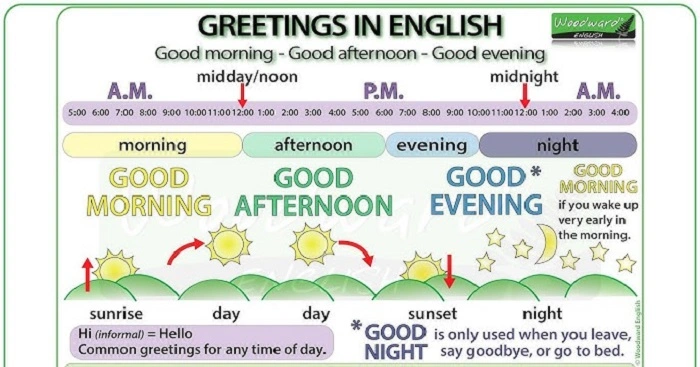
Greetings of the day” is a courteous way to greet the person properly, without connecting the greeting with an hour. It never connects the greeting with an hour as “Good morning” or “Good evening.” It can act as a business or formal communication neutralizer.
Example: “Greetings of the day, Mr. Shah. Hope you are doing well.”
It’s kind of a catch-all, one-size-fits-all, type of greeting, something like one telling another, “I wish you good luck today.”
Origins and Popularity
Although used less in Western English-speaking countries, “Greetings of the day” has been used uniformly across South Asia, the Middle East, and other African countries in business communication. It likely was formed as a combination of appropriate greeting accepted in conventional script and necessity of time-invariant greeting.
In early English correspondence, “Season’s greetings” or “Greetings and salutations” were employed. Later, “Greetings of the day” was adopted, which was brief in nature.
Where You Might See It
Business Emails – Especially for semi-formal or formal emails.
Customer Service Replies – By businesses as a return reply to customer questions across the globe.
Event Invitations – As a warm greeting beginning for announcements or programs.
Formal Greetings – Formal government or institution announcement when impersonal greeting needs to be used.
When to Use “Greetings of the Day”
Usage depends upon level and tone of relationship with the recipient.
Use When:
- Writing to someone whose time schedule or zone is unknown.
- Sending formal mass mail or newsletters.
- Doing a formal and official business launch.
- To someone who just so happens to be of a culture where this is an expected greeting.
Avoid When:
- In informal emails to close friends or close co-workers.
- Where it would be too formal or distant-sounding.
- Trying to sound like an informal friend-sounding person — “Hi” or “Hello” would be better.
Examples of Correct Usage
Email Example
Good morning/day, Ms. Ahmed. Thank you for your interest in our programme. The attached brochure is below for more information.
Event Announcement:
Good morning/day to everyone. It is with great pleasure that we provide you with the information about our forthcoming annual meet.
Customer Support:
Good morning/day, and thank you for reaching out. Our support team will respond within 24 hours.
Perception Across Cultures
In Pakistan, India, and Bangladesh, its usage is totally the standard in business correspondence. In the U.S., U.K., Canada, and Australia, however, it’s really out of place, and even some people think that it’s too formal or rather stodgy. In global business correspondence, it’s wise to inquire if your addressee happens to be pretty familiar with it.
Common Alternatives
If you need to sound formal but go back to an expression in common usage, you can employ:
- Good day
- Hello
- Dear [Name]
- Hope you are well
- Best wishes
- Wishing you well
Benefits of “Greetings of the Day”
Time Neutrality – Can be sent in any time zone or at any part of the day.
Formality – Convenient for formal or business mail.
Politeness – Exhibit courtesy to the recipient.
Versatility – Both to individuals and groups.
Disadvantages of “Greetings of the Day” Use
Lack of Warmth – It is impersonal as compared to personalized greetings.
Perceived Obsolescence – Others will perceive it as old-fashioned.
Regional Limitation – Not widely in use or popular in all areas of the English language.
Effective Use of “Greetings of the Day”
Use It with a Name – It is personalized.
Insert a Warm Sentence – Such as “I hope this message finds you well.”
Know Your Audience – Use it if you are sure that the culture of the recipient would enjoy it.
Don’t Overuse It – Alternate between your salutations in future emails to prevent habituation.
Make Sure the Tone of the Message – Let the tone of the rest of the email complement the formal tone.
Why Time-Neutral Salutations Are Important in Global Communication
With companies and groups from other continents, morning-specific salutations like “Good morning” may not be fitting at all hours. A time-independent greeting avoids accidentally wishing someone “Good evening” when it is still morning in their place.
“Salutations of the day” covers that requirement especially in customer service, freelancing, telecommuting, and export sales sectors.
Modern Email Etiquette and Greetings
While the first sentence of an email is arguably inconsequential, it sets the tone for the rest of the email. A greeting should be:
- Respected – Be respectful to the recipient.
- Appropriate – Responsively appropriate for the context of the message.
- Concise – Not very lengthy formality unless impossible to avoid.
- Regionally Sensitive – Responsive to regional communication variations.
“Hello of the day” meets all but a few of these formal communication requirements, but one would still find oneself unsure whether a newer model is preferable.
Final Thoughts
“Greeting of good day” is a polite, time-zone-neutral greeting suitable for business purposes and global world time-zone application. Not a universal greeting, but it’s a considerate and handy greeting in most cultures. The secret is to pick a greeting suitable for your audience, message, and level of formality needed.
If applied tastefully, and not in a mass-market manner, it can yet remain a potent means of opening missives in the era of global communication.
FAQs On “Greetings of the Day”
Is “Greetings of the day” grammatically correct?
Yes, it is grammatically correct though formal and less used in sections of the world.
May I use it in informal emails?
You can but it is too formal for daily usage. “Hi” or “Hello” would be more suited for daily usage.
British or American English?
Uncommon in both but less common in South Asian English.
Can it be substituted by “Good morning” or “Good evening”?
Yes, especially if you do not know anything regarding the time zone of the recipient.
Why is it regarded as old-fashioned?
As it is not typical usage in modern spoken English and would put one into the writing mode of old-fashioned letters.