



If you’ve ever hesitated in a conversation, wondering whether to say would, could, or should. Then you’re not alone. These three small words are modal verbs. They are special verbs in English. They express possibility, ability, advice, permission, or hypothetical situations. They’re short. But they can completely change the meaning of a sentence.
Learning proper use of would, could, and should will make you speak and write better, more respectfully and more accurately both in speech and on paper.
You’ll learn here what these words do, how to do it, the most common errors to avoid, and many useful examples.
Why Would, Could, and Should Should be in English
The masters of English language speech are these modal verbs. They help you:
- To make polite requests
- To speak of possibilities
- To give advice
- To speak of impossible or imaginary circumstances
- To speak of past ability or missed chances
Without them, your speech will be too blunt, one-sided, or even insulting.
Example:
Without modal: I help you. (Says something incorrect, i.e., statement and not an offer)
With modal: I could help you. (Sounds like an offer or a possibility)
What Are Modal Verbs
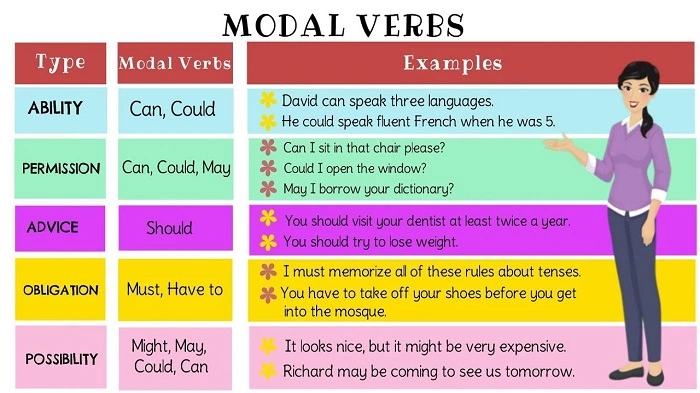
Modal verbs support auxiliary verbs that add to the meaning of the principal verb. They never change their form according to the subject, and always precede the base form of the principal verb (without to).
Examples:
- I would like tea.
- She could run faster when she was young.
- You should visit a doctor.
Knowing “Would”
Hypothetical Situations
Would is used to state something that does not exist or is not real.
Examples:
I’d travel the world if I were wealthy.
She’d help you if she were there.
Making or Requesting Politely
Would make or make an offer or a request polite.
Examples:
Would you kindly have a cup of coffee?
I.d be happy to help you.
Referring to the Future in the Past
We would use would every time we are talking about something in the future from a past position.
Examples:
He said he would call back.
I thought the movie would be excellent.
Habits in the Past
Would can indicate repetition in the past, though.
Examples:
We would visit our grandparents in the summer.
I would be out all day when I was a kid.
How “Could” Works
Ability (Past Ability or Possibility in the Present/Future)
Was used to talk about ability in the past or possibility in the present or future.
Examples:
She was able to swim when she was five years old.
We can go to the park in the evening.
Polite Suggestions or Requests
Could make the request polite.
Examples:
Could you pass me the salt, please?
You could try turning the computer on once more.
Discussion of Hypothetical Possibilities
Forceful and strong, similar to would, but concerning what can be done.
Examples:
I could have won the game if I worked harder.
He could be in the library at this moment.
Uncertainty
May can express that something is likely to occur but is not definitely sure.
Examples:
It may rain this afternoon.
She may be exhausted after the long drive.
Understanding “Should”
Advising or Making Suggestions
Should is often employed to tell one what one should or ought to do.
Examples:
You should eat more vegetables.
He should apologize for his mistake.
Forming Expectation
We use should in attempting to tell one what is expected or should normally occur.
Examples:
The train should arrive at 7.
You should be fine after resting for a while.
Of Duties
It can imply a duty or ethical responsibility.
Examples:
Students should respect their teachers.
We should maintain the environment.
Condemning or Regretting the Past
Built with have + past participle, should say something should be done but isn’t not.
Examples:
You should have studied hard for the exam.
I should have called her earlier.
Distinguishing Between Would, Could, and Should
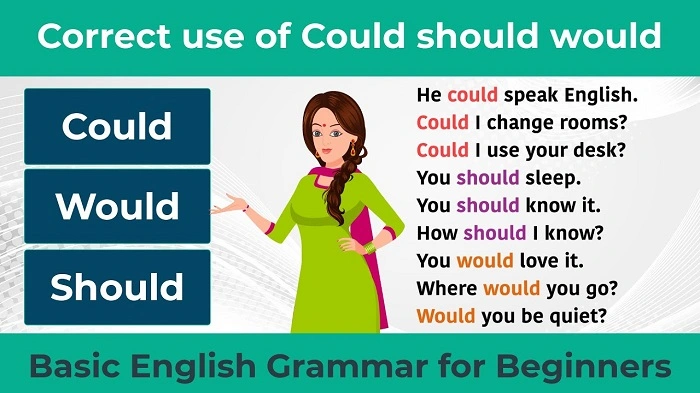
Would – If-circumstances, polite requests, or future in past.
Could – Possibility, ability, or politeness request.
Should – Advice, need, or requirement.
Also Read: Greetings of the Day: Meaning, Usage, and Etiquette
Example Sentence Including All Three:
If I had a longer vacation break, I would go. (hypothetical)
I could visit my family next month. (possibility)
You should rest when you become stressed. (advice)
Common Mistakes
Using them with the wrong verb form
Wrong: I would went there.
Right: I would go there.
Mixing them in meaning:
Could is possibility or ability, but would is hypothetical situations.
Example:
I can assist you.
I would assist you. (I want to do it on certain conditions)
Leaving out “have” in the past tenses:
Wrong: I should called you last week.
Correct: I should have called you last week.
Real-Life Reasons in Spoken English
In Daily Life:
Would you like to come and have dinner with us?
We could spend an evening tonight watching a film.
You should rest.
In Storytelling:
I could read for hours when I was little.
And then on the other side of our garden, perhaps we would be able to see the mountains.
You should have seen the sun yesterday; it was huge.
Practice Sentences
Fill in the sentences with would, could, or should:
If I were you, I ___ take that job offer.
She ___ must have run very fast when she was little.
We ___ go to the beach tomorrow if the weather allows.
You ___ be able to go to the new restaurant in town; it is great.
He promised me that he ___ call me later.
I ___ assist you, but I am occupied for now.
You ___ would have informed me you are going there.
They ___ already be at the airport.
When I was a kid, I ___ play outside until nighttime.
You ___ study for the test so that you can pass.
(Answers: 1. would, 2. could, 3. could, 4. should, 5. would, 6. would, 7. should, 8. could, 9. would, 10. should)
Tips to Master Would, Could, and Should
Listen to Native Speakers – Watch a movie or TV programme and listen to the way they use these words.
Practice Speaking – Make your own example sentences and practice reading them out.
Learn in Context – Master them in context, and not by rote memorizing lists of meanings.
Watch out for Tone – The modal verbs can be used to assist with softening requests so that they are polite.
Use Past Forms – Master getting a feel for using would have, could have, and should have to discuss the past.
Final Thoughts
Would, could, and should are handy resources for polite and succinct English language. They help us talk about possibilities, suggest, and make comments on abstract or past events in a flawless manner. Practice of contrasts and utilization of them on a daily basis will help you utilize them properly in speaking, emails, and presentations.
Frequently Asked Questions About Would, Could, and Should
Can I use would and could together?
Yes, but with contrasting meanings. E.g.: I would assist you if I were able to.
Is could invariably in the past?
No. Could is present/future possibility or past ability.
Is should stronger than would?
Yes, should typically conveys obligation or advice, but would is used for willingness or hypotheticals.
Can I utilize “should have” to create past regrets?
Yes. e.g.: I should have worked harder.
Is “would have” utilized for chances lost?
Yes. I would have gone, but I was busy.
Can and might can they convey the same meaning?
They’re nearly the same sense, but could have is more interested in ability, and might have is more interested in possibility.
How do I use them effectively?
By practicing them daily, applying them in context, and keeping an ear on their usage throughout movies, readings, and class.