


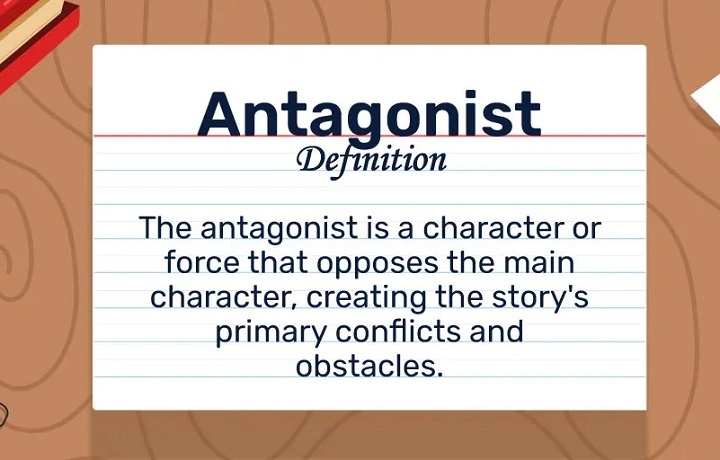
Every story takes breath because of contrast. Heroes shine, but only if darkness pushes them. That darkness, that pushback, bears a name—antagonist. Putting antagonists in a sentence adds life to that tension.
Think of Luke Skywalker without Darth Vader. Think of Harry Potter without Voldemort. Without the antagonist, the journey loses meaning. And it’s not just in books or films. Antagonists exist in daily struggles, in fears, in setbacks. By the end of this guide, you’ll know how to use antagonist in a sentence with confidence, depth, and clarity.
What Does Antagonist Mean
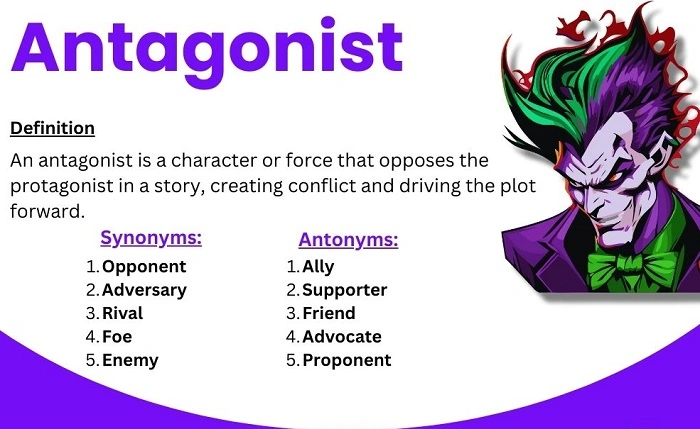
Antagonist is an opposition force. It’s not always a villain’s mask. Sometimes it’s human. Sometimes it’s nature. Sometimes it’s the enemy within.
- The antagonist is the adversary of the hero.
- The antagonist is the tempest against survival.
- The antagonist is the skepticism against advancement.
It comes from Greek roots meaning “to struggle against.” And that’s what it does—it labels the struggle.
How to Use Antagonist in a Sentence
The sentence is brief.
Subject + is/was + the antagonist of/against + character or idea
- The crooked official was the antagonist in the novel
- The actual antagonist in her life was fear
- The arrogance was his inner antagonist towards his development
- Their biggest antagonist was the rival company
Every sentence is brief, to the point, and conflict-filled.
Daily Use of Antagonist
Antagonists do not belong to literature classes only. It can be a part of everyday parlance.
- The chill of the weather was the villain of our picnic
- Laziness is the villain of ambition
- Traffic is the villain of my morning peace
- Doubt was the villain of her dream
- Time itself is the largest villain
The term gives shape to forces we already feel in life.
Why Use Antagonist Instead Of Simple Terms
Because the antagonist is more charged than “problem” or “issue.” It suggests drama. It attaches the fight with specificity.
- It makes it bigger. Saying “the problem in the story” is boring. “The antagonist” sounds heavy.
- It rings true. We all recognize our own antagonists—fear, envy, failure.
- It explains. It gets rid of vagueness. You point to the exact opposition.
When you put the word antagonist in a sentence, you are giving readers something to lean in for.
Synonyms and Related Words
There are other words close to antagonist.
- Opponent
- Rival
- Adversary
- Challenger
- Enemy
Examples:
- The rival team was the antagonist of the season
- His biggest enemy was his own lack of self-control
But the antagonist does more. It suggests a character in a broad story.
Antagonist in Stories and Literature
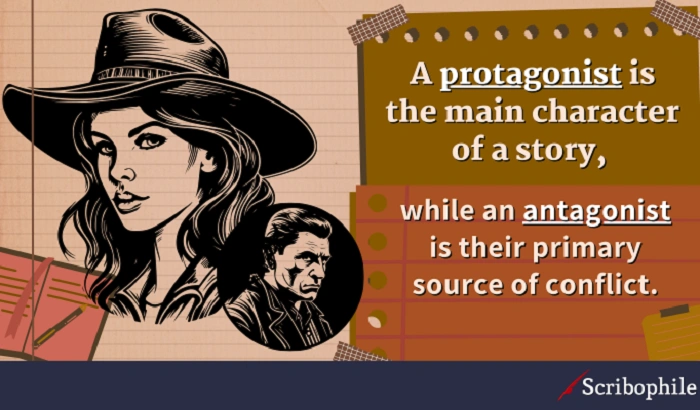
Conflict is the basis of every story, and the antagonist provides it.
- In Romeo and Juliet, familial hate is the true antagonist
- In Moby-Dick, the whale is the antagonist
- In The Lion King, Scar is the obvious antagonist
At other times, the antagonist is not human. It could be fate, society, or inner weakness. That’s what makes the word so versatile.
Antagonist in Real Life
Leave fiction behind. We meet antagonists every day.
- Procrastination is the enemy of progress
- Fear is the enemy of opportunity
- Injustice is the enemy of freedom
You may never fight a supervillain. But you will have an antagonist all the time.
Common Mistakes
Authors and orators abuse the word all the time.
- Confusing the terms antagonist and villain. A villain is not necessarily an antagonist.
- Using antagonists too restrictively. It can be systems, ideas, or conditions.
- Failing to consider context. An antagonist doesn’t exist without a protagonist or a goal.
Wrong: The antagonist is always the villain
Right: The antagonist is anything in opposition to the main character
Business
- Higher costs took the role of the antagonist of growth
- Competition was the antagonist of their expansion
Education
- Distraction is the enemy of learning
- Ignorance is the enemy of progress
In Health
- Stress is the enemy of well-being
- Bad habits are the enemy of longevity
Using antagonists in a sentence at work puts challenges into proportion. It slashes the story of challenge and resolution.
Antagonist vs Protagonist
They are two sides of the same coin. The protagonist progresses. The antagonist resists.
- In the film, the protagonist was a young physician, the antagonist was disease itself
- In the novel, the hero craved liberty, the villain was repressive law
One can’t exist without the other. They’re dance partners in every narrative.
Emotional Power of Antagonist
Antagonist isn’t chilly grammar. It’s an emotional flame.
- By calling fear an antagonist, you make it a target you can oppose.
- By calling injustice an antagonist, you empower people to resist.
- When you define failure as an antagonist, you make it a stepping stone.
Finding the antagonist is the first step to overcoming it.
Practice Sentences with Antagonist
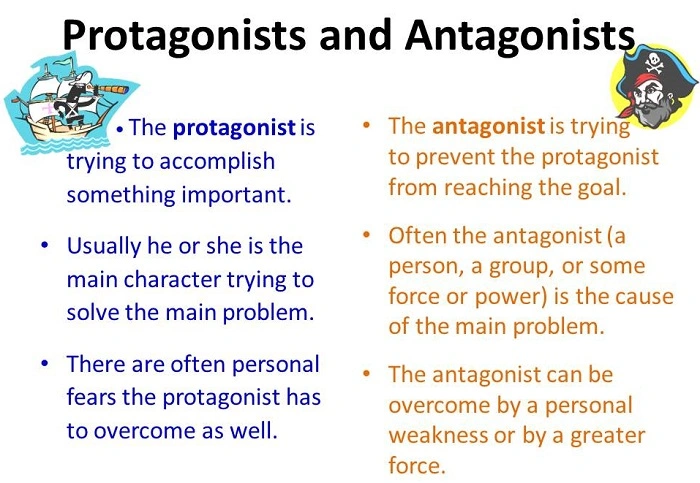
This is how you can do it every day.
- Select a goal.
- Find out what’s against it.
- Cast it as an antagonist.
Examples:
- His restlessness was the antagonist of his career
- Glitches of technology became the antagonist of the project
- The storm was the antagonist of our trip
Short, concise, and powerful.
Beyond People
Antagonists do not need to wear human faces.
- Poverty may be the villain of opportunity
- Addiction is the villain of freedom
- Corruption is the villain of justice
By naming these forces, you bring them into sight—and struggle.
Cultural and Literary Span
Across cultures, villains dictate the stories people tell.
- In mythology, gods or demons are villains
- In folklore, storms or famine are the villain
- In modern stories, self-doubts are villains
From epic poems to Netflix series, villains persist.
Why Antagonist Still Matters
The world of today craves simplicity. Antagonist delivers. Instead of vague “problems,” you lay out the exact opposition. It decelerates the scroll. It grabs one’s attention.
Applying antagonism to a sentence, as opposed to merely labeling an obstacle, you are narrating a story of contention and triumph.
FAQs about Antagonist in a Sentence
What is the meaning of antagonist in a sentence?
It is the opposing force to the main idea or character.
Can antagonists be used outside of literature?
Yes, to competitors, battles, and forces in the world.
Is the antagonist evil?
Not always, it’s just the opposing force.
How is the antagonist different from the villain?
A villain is a type of antagonist, but antagonists can be nature, society, or faults.
How do I use antagonists in sentences?
Write sentences daily marking the force that is contrary to a goal or character.
Conclusion
Antagonist is a word, but one that is greater than the literary kind. It is the name for resistance. It is the shape of struggle. It is the darkness that makes light possible.
When you place an antagonist in a sentence, you are doing more than typing. You are announcing the war. You are declaring the power that makes victory worthwhile.
There is an enemy for every nightmare. There is someone who attempts to match every hero. There is darkness in every existence. And once you call them, you make sense of the journey.